Unlocking Visual Personality with the Baliem Display Font
In the vast ecosystem of digital design, typography often serves as the silent ambassador of a brand's voice. While many designers rush toward safe, ubiquitous sans-serif options, there is a growing demand for typefaces that inject character, warmth, and a distinct human touch into visual communications. Enter Baliem, a cool and quirky display font that has rapidly become a wonderful asset for creators looking to differentiate their work. Whether you are a business owner crafting a new logo, a professional designer curating a portfolio, or an online content creator seeking to make your thumbnails pop, understanding the nuances of this typeface can significantly enhance your creative output.
The Essence of Quirky Elegance
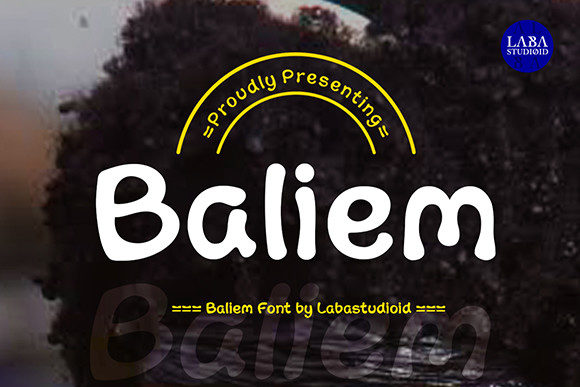
At its core, Baliem is designed to break the monotony of standard geometric fonts. It strikes a delicate balance between modern minimalism and playful eccentricity. The term "quirky" in its description is not merely marketing fluff; it refers to the subtle irregularities in stroke weight, the unique curvature of specific terminals, and the overall rhythm that feels hand-crafted rather than mechanically generated. These characteristics give the font a personality that feels approachable yet sophisticated.
When you integrate Baliem into a project, you are essentially borrowing a voice that speaks with confidence but without arrogance. Unlike aggressive display fonts that scream for attention, Baliem invites the viewer in. It possesses a certain charm that makes it particularly effective for industries where trust and creativity intersect, such as boutique hospitality, artisanal food products, and lifestyle blogging. The font's ability to remain legible while offering distinct stylistic flourishes makes it a versatile tool in any designer's library.
Key Characteristics and Features
To truly leverage the potential of Baliem, one must understand its structural anatomy. The font family typically includes a range of weights, allowing for dynamic hierarchy within a single design piece. However, its true strength lies in its display capabilities. Here are some defining features:
- Distinctive Letterforms: Certain characters feature exaggerated curves or unexpected angles that serve as focal points in short text strings.
- Optimized Spacing: The kerning is pre-adjusted to ensure that even at larger sizes, the letters breathe correctly, preventing the "clumping" effect common in novelty fonts.
- Versatile Weight Range: From light and airy to bold and impactful, the varying weights allow the font to adapt to different background colors and textures.
- Multi-Language Support: Ideally suited for global projects, it often includes extensive glyph sets to accommodate various European languages.
These features combine to create a typeface that is not just visually striking but also functionally robust. For professionals, this means less time tweaking individual letter pairs and more time focusing on the broader composition of the design.
Practical Applications Across Industries
The question often arises: where exactly does a font like Baliem fit best? Because it is a display font, its primary domain is headlines, logos, and short bursts of text rather than long-form body copy. However, the scope of these applications is surprisingly broad.
Consider the hospitality sector. A coffee shop aiming to convey a vibe that is both trendy and welcoming might use Baliem for its storefront signage and menu headers. The quirkiness suggests a unique blend of beans and a non-corporate atmosphere, while the clean lines assure customers of quality and hygiene. Similarly, in the fashion industry, particularly for streetwear brands or independent boutiques, Baliem can be used on packaging and hang tags to create an immediate emotional connection with the consumer.
For digital creators, the utility of Baliem extends to social media graphics and video thumbnails. In an environment where users scroll rapidly, a thumbnail with a generic font is easily ignored. Using Baliem for the main title text can increase click-through rates by signaling that the content is fresh, creative, and worth the viewer's time. It acts as a visual hook that complements high-quality imagery.
- Branding and Identity: Perfect for logotypes where the name of the business needs to stand alone as a graphic element.
- Packaging Design: Adds a premium, handcrafted feel to product labels for cosmetics, foods, and beverages.
- Editorial Headers: Ideal for magazine covers, blog post titles, and newsletter headers that need to grab attention immediately.
- Merchandise: Works exceptionally well on t-shirts, tote bags, and posters where the text is the primary design feature.
Evaluating Suitability for Your Project
While Baliem is a powerful tool, it is not a universal solution for every typographic need. A critical part of professional design is knowing when not to use a specific font. Because Baliem is a display typeface with distinctive character, it can become overwhelming if used in large blocks of text. Reading a paragraph set entirely in Baliem can cause eye fatigue due to its decorative nature.
When evaluating whether to include Baliem in your font library or a specific project, consider the following criteria:
- Message Tone: Does the project require a serious, authoritative tone (like a legal document or a medical report)? If so, a neutral serif or sans-serif is likely a better choice. Baliem shines when the message is inviting, creative, or lifestyle-oriented.
- Context of Use: Will the text be viewed from a distance or on a small mobile screen? Ensure that the quirky details do not disappear or become muddy at smaller resolutions.
- Pairing Potential: A display font rarely works in isolation. Consider what body font you will pair it with. Baliem pairs beautifully with clean, geometric sans-serifs for a modern look, or with classic serifs for a juxtaposition of old and new.
Maximizing Value in Your Creative Workflow
Investing in a high-quality font like Baliem is an investment in efficiency and brand consistency. When you have a typeface that naturally commands attention, you spend less time adding unnecessary graphical elements to compensate for weak typography. The font does the heavy lifting, allowing your layout to remain clean and uncluttered.
Furthermore, owning a licensed version of such a font ensures that your work remains unique. Many free fonts are overused, leading to a homogenized visual landscape where multiple brands inadvertently look the same. By incorporating a specialized asset like Baliem into your library, you safeguard your creations against this trend, ensuring that your visual identity remains distinct and memorable.
It is also worth noting the psychological impact of typography. Studies in consumer behavior suggest that the style of text influences how information is perceived and remembered. A font that feels "cool and quirky" can make a brand appear more innovative and customer-centric. For business owners, this translates to a tangible competitive advantage. It signals that attention to detail is a priority, which often correlates with the perceived quality of the product or service itself.
Final Thoughts on Typography Strategy
In conclusion, typography is far more than just choosing letters; it is about curating an experience. Baliem represents a segment of modern type design that values personality without sacrificing readability. Its potential to enhance any creation lies in its ability to adapt to various contexts while maintaining a consistent, engaging voice.
Whether you are refreshing an existing brand identity or starting a new project from scratch, considering a font like Baliem can elevate the final result. It encourages designers and business owners alike to move beyond the safe choices and embrace tools that offer genuine character. As the digital space becomes increasingly crowded, the assets that help you stand out—like a well-chosen, quirky display font—become invaluable. By understanding its strengths, respecting its limitations, and applying it with intention, you can unlock new levels of visual communication that resonate deeply with your audience.