Making a Bold Statement with the Forehead Display Font
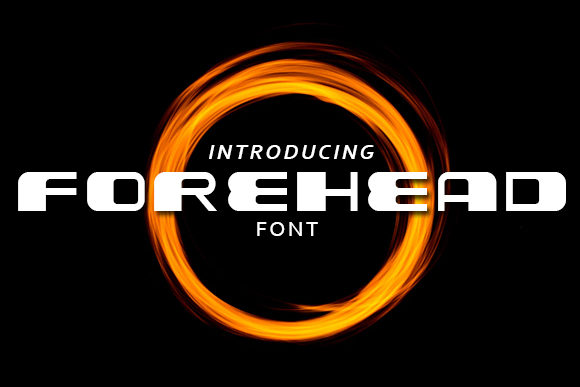
In the crowded landscape of digital design and print media, capturing attention within the first few seconds is not just an advantage; it is a necessity. Designers, marketers, and creators are constantly hunting for typography that cuts through the noise, offering immediate visual impact without sacrificing readability or style. This is where Forehead steps in. As a bold and thick lettered display font family, it brings a distinct techno-modern aesthetic to any project that demands presence. Whether you are crafting a poster for an underground music festival, designing a landing page for a cutting-edge tech startup, or creating packaging for a streetwear brand, this typeface offers the structural integrity and stylistic flair needed to make your message unforgettable.
The Anatomy of a Modern Display Typeface
What exactly makes a font like Forehead stand out in a sea of sans-serifs and serifs? The answer lies in its geometry and weight. Unlike traditional body text fonts designed for long-form reading, display fonts are engineered for headlines, logos, and short bursts of text where size matters. Forehead excels here because of its exaggerated thickness and clean, sharp lines. The letters are constructed with a robust stroke width that commands authority, yet they maintain enough negative space to remain legible even at massive scales.
The "techno" touch mentioned in its description isn't just a buzzword; it is embedded in the character shapes. You will notice subtle industrial influences—perhaps squared-off terminals, uniform stroke widths, or geometric precision—that evoke feelings of machinery, futurism, and high-speed connectivity. This makes the font particularly effective for industries rooted in innovation. When a viewer sees Forehead, they subconsciously associate the brand or message with stability, forward-thinking, and modernity. It bridges the gap between raw industrial power and sleek digital minimalism.
Integrating Forehead into Contemporary Workflows
Adopting a new typeface into your creative workflow should feel seamless, and versatile fonts like Forehead are built with this in mind. In modern design ecosystems, compatibility is key. Whether you are working in Adobe Illustrator for vector-based logo design, Photoshop for textured social media graphics, or Figma for responsive web interfaces, a well-constructed display font integrates smoothly. The bold nature of Forehead means it often requires less manipulation to achieve the desired effect. You don't need to add heavy drop shadows or complex outlines to make it pop; the weight of the font does the heavy lifting for you.
Consider the workflow of a motion graphics designer. In video editing software like After Effects, thick fonts are essential for lower-thirds and title cards that need to be read quickly on mobile devices or amidst fast-paced action. Forehead provides the necessary visual mass to hold its own against dynamic backgrounds. Similarly, for UI/UX designers working on dark mode interfaces, the high contrast of a thick, light-colored Forehead headline against a dark background creates a striking hierarchy that guides the user's eye immediately to the most important information.
Industry Applications and Use Cases
The versatility of Forehead allows it to transcend a single niche, though it shines brightest in sectors that value a futuristic or edgy vibe. Let's explore how different industries can leverage this font family:
- Gaming and Esports: The gaming industry thrives on high-energy visuals. Team logos, tournament brackets, and stream overlays benefit immensely from the aggressive, solid structure of Forehead. It conveys competition and strength.
- Music and Entertainment: From techno and house music album covers to concert posters, the font's rhythmic, blocky appearance mirrors the beat of electronic music. It feels native to the culture of nightclubs and festivals.
- Tech Startups: Companies launching AI solutions, blockchain platforms, or hardware innovations need branding that looks established yet future-ready. Using Forehead for a main value proposition on a homepage instantly signals "innovation."
- Fashion and Streetwear: Urban fashion brands often rely on bold typography for t-shirt graphics and lookbooks. The industrial feel of this font aligns perfectly with utilitarian and cyberpunk fashion trends.
It is important to note that while Forehead is powerful, it is best used sparingly. Because of its heavy weight, using it for paragraphs of body text would overwhelm the reader and reduce legibility. Instead, treat it as the accent piece in your typographic toolkit. Pair it with a lighter, more neutral sans-serif for body copy to create a balanced and professional composition. This contrast ensures that the boldness of Forehead remains a highlight rather than a distraction.
Design Considerations and Best Practices
Before committing to Forehead for a major project, there are several practical factors to consider. First, think about scalability. While display fonts are meant to be large, you must ensure they retain their clarity when scaled down for mobile views or favicons. The thick strokes of Forehead generally handle scaling well, but tight kerning (the space between letters) might need adjustment at smaller sizes to prevent the characters from merging into a solid block.
Color choice is another critical element. A font this bold interacts strongly with color. High-contrast combinations, such as neon green on black or stark white on deep blue, amplify the techno aesthetic. However, don't be afraid to experiment with gradients or textures within the letters themselves. The substantial surface area of each character in Forehead provides ample canvas for creative fills, making it an excellent candidate for experimental graphic design.
Furthermore, consider the emotional tone of your project. While Forehead is undeniably cool and modern, its boldness can sometimes come across as aggressive or impersonal if not contextualized correctly. For a brand that wants to appear friendly, approachable, or organic, this font might be too rigid. It is ideally suited for entities that want to project confidence, efficiency, and cutting-edge capability. Understanding the psychological impact of typography is just as important as the visual appeal.
Why Original Design Matters in a Saturated Market
In an era where thousands of free fonts are available with a single click, opting for an originally designed font family like Forehead can be a strategic differentiator. Many generic bold fonts suffer from poor hinting, inconsistent weights, or overused geometries that make a brand look templated. A carefully crafted display font offers unique ligatures, optimized spacing, and distinct character quirks that give your project a signature look.
When you choose Forehead, you are selecting a tool that was specifically engineered to deliver a "techno, modern touch." This specificity means you aren't fighting the font to make it work; the font is working with you to achieve a specific atmosphere. In branding, these nuances add up. They contribute to a cohesive visual identity that feels intentional and professional. Clients and audiences alike can sense the difference between a default system font and a curated typographic choice.
Ultimately, the goal of any design project is communication. You want your audience to not only see your message but to feel it. The structural boldness and futuristic charm of Forehead provide a direct line to that emotional response. It transforms simple words into visual statements. Whether you are laying out a magazine spread, designing a billboard, or building a digital portfolio, incorporating this font family adds a layer of sophistication and edge that keeps viewers engaged. By understanding its strengths and applying it with intention, you can elevate ordinary designs into extraordinary experiences that resonate in our fast-paced, technology-driven world.