Evaluating Liberate: A Strategic Guide to Its Use in Branding and Design
In the landscape of modern typography, selecting the right typeface is a critical decision that influences brand perception, readability, and overall aesthetic cohesion. Liberate has emerged as a notable option for designers and business owners seeking a distinctive voice for their visual identity. Defined as a fancy various-themed font, it offers a unique blend of stylistic flair and structural versatility. This article provides an objective evaluation of Liberate, exploring its characteristics, ideal applications, potential limitations, and the strategic considerations necessary to determine if it aligns with your specific project goals.
Understanding the Characteristics of Liberate
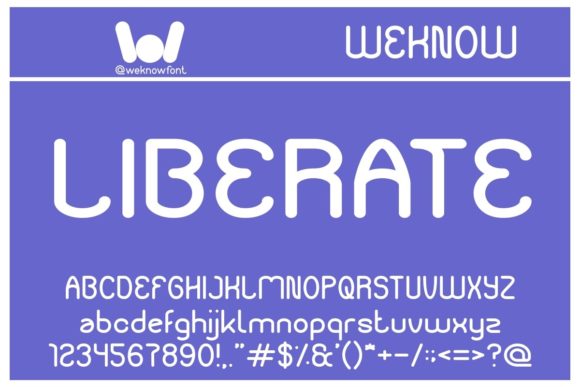
At its core, Liberate is designed to stand out. Unlike neutral sans-serif fonts intended for invisible readability in long-form text, Liberate prioritizes personality. The term "various-themed" suggests that the typeface family or its specific cuts offer a range of stylistic alternates, ligatures, or weights that allow for significant customization. This flexibility enables designers to tweak the appearance of logotypes and headlines to suit diverse moods, from elegant and sophisticated to bold and contemporary.
The "fancy" descriptor often associated with Liberate indicates the presence of decorative elements, such as swashes, unique terminal shapes, or high-contrast strokes. These features make it particularly effective for display purposes where the font acts as a graphical element rather than just a vessel for information. When evaluating Liberate, one must recognize that its primary strength lies in its ability to convey a specific tone immediately upon viewing, making it a powerful tool for establishing corporate identity.
Strategic Applications and Ideal Use Cases
Deciding whether to implement Liberate depends heavily on the context of its application. The font shines in scenarios where impact and memorability are paramount. Below are key areas where Liberate typically serves as a strong fit:
- Logos and Logotypes: Because of its distinctive character shapes, Liberate is highly effective for creating unique brand marks. It helps businesses differentiate themselves in crowded markets by providing a custom feel without the cost of a bespoke type design.
- Headlines and Display Text: In editorial design, advertising, and web banners, Liberate commands attention. Its stylistic nuances draw the eye, making it ideal for covering stories, product launches, or event announcements.
- Corporate Identity Systems: For brands looking to project creativity, luxury, or innovation, Liberate can serve as the cornerstone of a broader visual system. When paired with a more neutral body font, it creates a balanced hierarchy that guides the viewer through the content.
- Creative Projects: From packaging design to merchandise, the various themes within Liberate allow for thematic consistency across different media while maintaining visual interest.
In these contexts, the font does more than communicate words; it communicates values. A fashion boutique, a creative agency, or a lifestyle brand might find that the inherent elegance or quirkiness of Liberate perfectly mirrors their market positioning.
Benefits and Design Advantages
The primary benefit of choosing Liberate is its capacity for expression. Standard system fonts often lack the nuance required to tell a compelling brand story. Liberate fills this gap by offering a pre-designed aesthetic that feels curated and intentional. The availability of various themes means that a single font purchase can yield multiple looks, providing cost-effective versatility for designers working on tight budgets or rapid timelines.
Furthermore, well-crafted display fonts like Liberate often include extensive OpenType features. These may include contextual alternates that automatically adjust letter connections for smoother flow, or stylistic sets that allow for quick experimentation during the design process. This level of control empowers designers to refine the kerning and spacing of a logotype until it achieves optical perfection, ensuring the final output looks professional and polished.
Tradeoffs and Limitations to Consider
While Liberate offers significant aesthetic advantages, it is not a universal solution. An objective evaluation requires acknowledging its limitations. The most notable tradeoff is readability at smaller sizes. Fonts with "fancy" details, high contrast, or complex shapes often suffer from legibility issues when scaled down for body text, captions, or mobile interfaces. The intricate details that make the font beautiful in a headline can become visual noise in a paragraph, causing eye fatigue for the reader.
Additionally, the distinctive nature of Liberate means it carries a strong personality. This can be a double-edged sword. If a brand requires a neutral, authoritative, or purely functional tone—such as in legal documents, technical manuals, or serious financial reporting—Liberate may appear too decorative or informal. In such cases, the font could undermine the perceived credibility or seriousness of the content.
There is also the consideration of trend longevity. Highly stylized fonts can sometimes date quickly if they align too closely with a fleeting design trend. While Liberate is crafted for versatility, designers should evaluate whether its specific stylistic choices will remain relevant for the lifespan of the brand identity they are building.
When to Consider Alternatives
Decision-making in typography often involves knowing when not
- Long-Form Content: If your project involves articles, reports, or books where the user must read hundreds of words continuously, a dedicated serif or humanist sans-serif designed for reading is a superior choice.
- Accessibility-Critical Interfaces: For users with visual impairments or dyslexia, simple, open letterforms with uniform stroke weights are essential. The decorative elements in Liberate might hinder accessibility compliance.
- Minimalist or Utility-Focused Brands: If the brand strategy relies on stark minimalism or industrial utility, a geometric sans-serif with no frills may align better with the core message than a fancy, themed font.
- Low-Resolution Environments: If the primary medium for the brand is low-resolution digital screens where fine details may pixelate or disappear, a robust, simpler typeface ensures consistent rendering.
Practical Decision-Making Insights
To determine if Liberate is the right choice for your project, begin by defining the emotional response you wish to evoke. Does the "fancy" and "various-themed" nature of the font support your brand narrative, or does it distract from it? Create a mockup of your logo or headline using Liberate alongside your proposed body font. Evaluate the contrast and harmony between the two.
Test the font across different mediums. Print a sample at various sizes and view it on both desktop and mobile devices. Pay close attention to how the "various themes" function in practice; do they add value, or do they complicate the design workflow? Ensure that the licensing terms for Liberate cover your intended commercial uses, especially if the project involves global distribution or merchandise.
Ultimately, Liberate is a powerful asset for projects that demand character and distinction. It excels in branding, headlines, and creative expressions where the font itself is part of the art. However, like any specialized tool, its effectiveness relies on appropriate application. By balancing its decorative strengths with practical readability requirements, designers can leverage Liberate to create memorable and impactful visual identities that resonate with their target audience.