Bone Splitter: A Strategic Asset for High-Impact Horror Branding
In the crowded landscape of visual communication, typography is rarely just about legibility; it is a primary vehicle for emotional transmission. When your project demands an immediate, visceral reaction—specifically within the horror, thriller, or dark fantasy genres—the choice of typeface becomes a critical business decision. Bone Splitter represents more than a stylistic novelty; it is a specialized tool designed to convey themes of mortality, danger, and the undead with unapologetic clarity. For entrepreneurs, marketers, and creative directors operating in these niches, understanding how to deploy Bone Splitter strategically can mean the difference between a project that blends into the background and one that commands immediate attention.
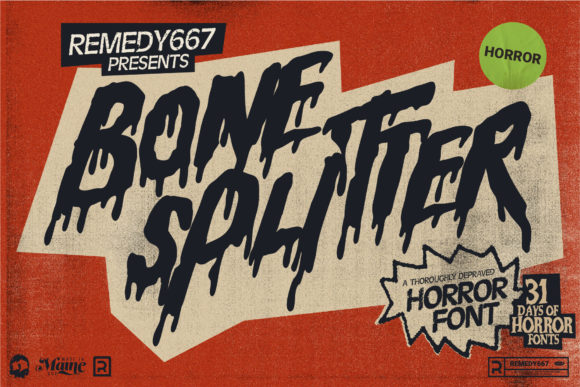
The core value proposition of Bone Splitter lies in its ability to bypass cognitive filtering. Unlike neutral sans-serif fonts that require the reader to process information before feeling an emotion, Bone Splitter delivers the mood before the first word is even read. Its signature bloody font style mimics the organic chaos of violence and decay, creating an instant atmospheric context. This is particularly vital for industries where the "hook" must be established within seconds, such as video game titles, movie posters, and album artwork. By utilizing a typeface that inherently screams "horror," you reduce the need for excessive graphical embellishments, allowing for cleaner compositions that rely on the strength of the letterforms themselves.
Aligning Typography with Brand Positioning and Goals
Effective branding is about consistency and expectation management. If you are launching a product line centered around Halloween apparel, a haunted attraction, or a heavy metal album, your visual identity must align perfectly with audience expectations. Bone Splitter serves as a semantic shortcut. When a potential customer sees this typeface, their brain immediately categorizes the associated product as part of the horror genre. This reduces friction in the decision-making process for the consumer.
However, strategic use requires discipline. The font should not be applied randomly across all touchpoints. It is best reserved for high-impact headlines, logos, and key visual assets where the goal is to grab attention and evoke a specific emotional response. Using Bone Splitter for body copy or detailed instructional text would be a strategic error, as its irregular, distressed nature compromises readability over long distances. The savvy practitioner uses Bone Splitter to draw the eye, then pairs it with a highly legible secondary font to deliver the actual message. This hierarchy ensures that the aesthetic impact supports, rather than hinders, communication.
Consider the implications for customer experience. In the entertainment sector, the "product" is often an emotional journey. A movie poster using Bone Splitter sets a promise of intensity and fear. If the film delivers on that promise, the typography has successfully acted as an accurate signpost, enhancing customer satisfaction. Conversely, if the font is used misleadingly on a product that lacks the promised edge, it creates a disconnect that can damage brand trust. Therefore, the decision to use Bone Splitter must be grounded in the reality of what you are offering.
Practical Applications Across Industries
The versatility of Bone Splitter extends beyond simple title treatment. Its application can be mapped across various operational and creative workflows:
- Video Game Development: For indie developers working on survival horror or slasher games, the title screen is the first interaction point. Bone Splitter provides an immediate tonal anchor, signaling the gameplay mechanics and narrative stakes before the player presses "start."
- Event Marketing: Promoters of haunted houses, escape rooms, or horror conventions can leverage this typeface for ticketing graphics and social media ads. The bold, eye-catching design stops the scroll in crowded feeds, increasing click-through rates for time-sensitive events.
- Apparel and Merchandise: In the fashion sector, particularly streetwear and niche subcultures, typography acts as the primary graphic element. Bone Splitter adds an authentic, gritty texture to t-shirts and hoodies that resonates with fans of the genre, adding perceived value to the merchandise.
- Music Industry: Album covers and tour posters for death metal, black metal, or horror-punk bands require visuals that match the sonic aggression. Bone Splitter offers a natural look that complements distorted guitars and aggressive vocals without looking digitally sterile.
Each of these use cases shares a common thread: the need for immediate genre recognition. By integrating Bone Splitter into your creative planning phase, you ensure that your visual assets are working harder to achieve your marketing objectives.
Technical Implementation and Workflow Considerations
To fully capitalize on the capabilities of Bone Splitter, one must understand the technical environment required to unlock its potential. While the font functions as a standard typeface in basic word processors, its true strategic value is realized when accessed through professional graphic design software. Programs such as Adobe Illustrator, Adobe Photoshop, Adobe InDesign, and Corel Draw allow designers to manipulate OpenType features that may be embedded within the font file.
These advanced features can include alternate glyphs, ligatures, or specific stylistic sets that vary the appearance of the "blood" and "bone" effects, preventing repetitive patterns in longer headlines. For a marketing team producing a series of posters, accessing these features ensures that each piece feels unique while maintaining brand cohesion. It is crucial for project managers to verify that their design team has access to these tools before commissioning work that relies heavily on the font's intricate details. Attempting to force these designs in limited software environments can result in pixelation or loss of detail, undermining the professional quality of the final output.
Furthermore, the "Doubles Elimination" feature mentioned in the font's specifications refers to a technique that enhances the natural look of the distressing. When planning your design workflow, allocate time for testing different character combinations. The irregularity that makes Bone Splitter effective also means that kerning (the space between characters) may require manual adjustment to ensure the word remains readable while retaining its chaotic aesthetic. This level of refinement is where the difference between an amateur execution and a professional asset lies.
Risk Management and Strategic Constraints
Every design decision carries risk, and the use of a display font as distinctive as Bone Splitter is no exception. The primary risk is over-saturation. Because the font is so thematically potent, using it too frequently or in inappropriate contexts can dilute its impact. If every headline in a campaign screams for attention, nothing stands out. Strategic restraint is essential.
There is also the risk of accessibility. While the "bloody" aesthetic is perfect for evoking fear, it can be difficult for individuals with visual impairments to decipher. From an ethical and operational standpoint, ensure that critical information—such as dates, locations, prices, and safety warnings—is never rendered exclusively in Bone Splitter. Always pair it with high-contrast, standard typography for functional text. This approach not only broadens your audience reach but also demonstrates a thoughtful consideration for user experience, reflecting positively on your brand's professionalism.
Additionally, consider the longevity of your project. Trends in horror aesthetics shift, but the core elements of fear remain constant. Bone Splitter leans towards a classic, visceral style of horror rather than a fleeting trend, making it a relatively safe bet for long-term branding assets. However, always evaluate whether the specific "look" of the font aligns with the evolving tastes of your target demographic. What feels terrifying to one generation may feel campy to another. Continuous market research should inform your decision to retain or rotate this typeface in your brand toolkit.
Making the Decision to Invest
Ultimately, acquiring and utilizing Bone Splitter is an investment in your project's atmospheric integrity. It is a decision that should be made with the same rigor as selecting a vendor or choosing a distribution channel. Ask yourself: Does my project require an immediate emotional hook? Is the horror genre central to my value proposition? Do I have the technical resources to implement this font correctly?
If the answer to these questions is affirmative, Bone Splitter offers a high-return opportunity to elevate your visual communication. It transforms standard text into a narrative device, telling the story of blood, death, and suspense before the audience engages with the content. By approaching this typeface with a strategic mindset—balancing its dramatic power with practical readability and technical precision—you can create projects that not only capture attention but also resonate deeply with your intended audience. The goal is not merely to make something look scary, but to use fear as a deliberate, effective tool for engagement and conversion.