Qualified Good: A Strategic Asset for Retro-Modern Brand Identity
In the crowded landscape of visual communication, typography is rarely just about legibility; it is a primary vehicle for tone, emotion, and brand positioning. Qualified Good emerges in this context not merely as a stylistic choice but as a strategic tool for creators and business owners aiming to carve out a distinct identity. As a cool and retro-themed display font, it carries specific cultural connotations that, when deployed with intention, can significantly enhance logo design, apparel lines, editorial layouts, and digital presence. However, the true value of any typeface lies not in its aesthetic appeal alone, but in how well it aligns with broader organizational goals and user experience objectives.
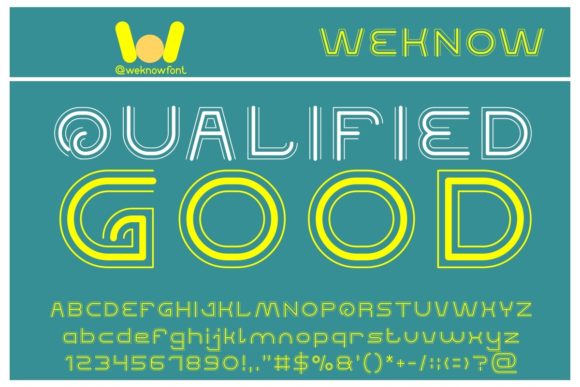
Understanding Qualified Good requires looking beyond its curved terminals and vintage-inspired glyphs. It represents a bridge between nostalgic warmth and modern clarity. For entrepreneurs and marketers, this duality offers a unique opportunity to signal authenticity while maintaining professional credibility. Whether you are launching a new craft beverage, designing a music festival poster, or refreshing a legacy brand's website, the decision to use this font should be grounded in a clear understanding of your audience's expectations and your long-term vision.
Strategic Positioning Through Retro Aesthetics
The resurgence of retro aesthetics in contemporary design is not accidental; it is a response to a market saturated with sterile, minimalist sans-serifs. Consumers often crave connection, history, and personality—qualities that Qualified Good delivers in abundance. By integrating this font into your brand identity, you are making a deliberate statement about your values. You suggest that your business honors tradition while operating in the present moment.
Consider the psychological impact on your target demographic. Adults aged 20 to 50, who make up the core of many consumer markets, have grown up witnessing multiple design eras. A retro-themed display font triggers a sense of familiarity and trust. When used in logos or brand identity systems, Qualified Good can soften the corporate edge, making a company appear more approachable and human-centric. This is particularly effective for small business owners and freelancers who rely on personal connection to drive sales and loyalty.
However, strategy dictates that nostalgia must serve a purpose. If your brand positioning is built on cutting-edge technology or ultra-modern efficiency, a heavy-handed retro font might create cognitive dissonance. The key is alignment. Use Qualified Good when your narrative involves craftsmanship, storytelling, community, or creative expression. In these scenarios, the font acts as a visual shorthand for "quality with character," reinforcing your message before the customer even reads the first word.
Practical Applications Across Industries
The versatility of Qualified Good allows it to function effectively across a wide spectrum of media, from physical merchandise to digital interfaces. Its robust structure ensures that it remains legible even when scaled down, while its distinctive features shine in large-format displays.
- Apparel and Merchandise: In the fashion industry, particularly streetwear and lifestyle brands, typography is often the hero of the design. Qualified Good works exceptionally well on t-shirts, hoodies, and tote bags where the text itself becomes the graphic element. Its retro vibe appeals to consumers looking for unique, non-mass-produced aesthetics.
- Entertainment and Media: For the music, movie, and game industries, atmosphere is everything. A poster for an indie film or a title screen for a retro-style video game benefits immensely from the specific mood this font evokes. It sets the stage for the narrative, signaling to the audience that they are about to experience something with soul and depth.
- Publishing and Editorial: Magazines, books, and comics require typefaces that guide the reader through a journey. While Qualified Good is a display font best suited for headlines and pull quotes rather than body copy, it can define the personality of a publication. It adds flair to chapter headings in a novel or titles in a comic book, enhancing the overall reading experience without sacrificing clarity.
- Digital Content Creation: YouTubers, Instagram influencers, and website owners need to capture attention instantly. Thumbnails and social media graphics compete in a high-speed environment. Using Qualified Good in these contexts can help your content stand out against the sea of generic fonts, increasing click-through rates and engagement by offering a visually distinct package.
Planning Your Typography Implementation
Adopting a new typeface like Qualified Good should be part of a broader design system plan, not an impulsive decoration. Thoughtful implementation ensures consistency and maximizes the return on your creative investment. Before committing to this font across all your assets, consider the following planning steps:
- Audit Your Current Assets: Review your existing logos, marketing materials, and digital platforms. Identify where the current typography fails to communicate your desired brand personality. Determine if a shift toward a retro-modern aesthetic aligns with your upcoming business goals.
- Define Usage Guidelines: Establish clear rules for how Qualified Good will be used. Specify minimum sizes, acceptable color combinations, and pairing strategies with secondary fonts. Since it is a display font, it should generally be reserved for headlines, logos, and short calls to action, while a neutral sans-serif or serif handles long-form text.
- Test for Accessibility: Even the coolest font must be readable. Test Qualified Good across different devices and screen resolutions. Ensure there is sufficient contrast between the text and background, especially for web and mobile applications, to accommodate users with visual impairments.
- Contextual Mockups: Create mockups of your font in real-world scenarios. Visualize it on a storefront sign, a mobile app interface, or a product label. This helps you anticipate potential issues with spacing or legibility before final production.
Risks of Unintentional Design Choices
While Qualified Good offers significant advantages, relying on it without a clear strategic framework can lead to detrimental outcomes. The primary risk is thematic mismatch. If a financial consulting firm or a medical device manufacturer uses a heavily stylized retro font, it may undermine their authority and perceived reliability. The audience might perceive the brand as frivolous or out of touch with professional standards.
Another common pitfall is overuse. Because Qualified Good has such a strong personality, using it for every piece of text can result in visual fatigue. When everything screams for attention, nothing stands out. This dilutes the impact of your key messages and creates a chaotic user experience. Effective design relies on hierarchy; let your display font shine by giving it space to breathe alongside simpler, functional typefaces.
Furthermore, trends are cyclical. While retro styles have enduring appeal, they can eventually feel dated if not executed with timelessness in mind. To mitigate this, focus on the structural qualities of Qualified Good rather than just its "vintage" label. Its balanced proportions and clean lines give it a longevity that purely decorative scripts often lack. By treating it as a foundational element of your brand rather than a fleeting trend, you safeguard your identity against rapid obsolescence.
Maximizing Long-Term Value and Creativity
Ultimately, the goal of selecting a typeface like Qualified Good is to facilitate better communication and stronger connections with your audience. When used intentionally, it becomes more than just a set of characters; it becomes a partner in your storytelling. It supports your operations by providing a consistent visual language that employees and partners can easily replicate, ensuring brand cohesion across all touchpoints.
For educators and publishers, this font can make learning materials more engaging, breaking the monotony of standard textbooks and inviting students into the content. For hobbyists and creators, it provides a professional polish that elevates amateur projects to portfolio-worthy pieces. The decision to use Qualified Good should always be driven by the question: "Does this help my audience understand and feel what I am trying to convey?"
In conclusion, Qualified Good is a powerful asset for those willing to approach design with strategy and foresight. It bridges the gap between the past and the future, offering a aesthetic that feels both familiar and fresh. By understanding its strengths, respecting its limitations, and planning its application carefully, you can leverage this retro-themed display font to build a brand identity that resonates deeply, performs effectively, and stands the test of time. Let your typography work as hard as your business does, turning every visual interaction into an opportunity for connection and growth.