Harewos: Strategic Typography for Bold Brand Positioning
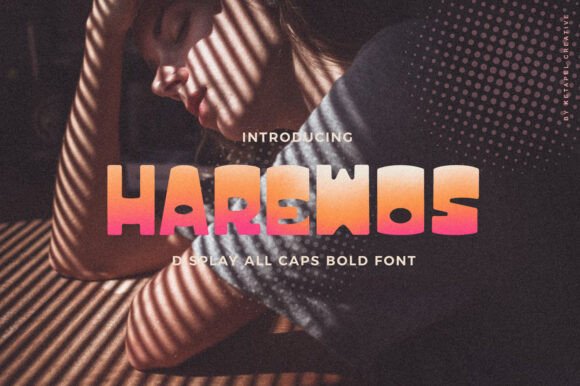
In the crowded landscape of visual communication, the difference between being seen and being ignored often comes down to a split-second decision made by the viewer. That decision is rarely about the fine print; it is about the immediate impression created by hierarchy, weight, and presence. This is where Harewos enters the strategic conversation. As a bold, all-caps display font, Harewos is not merely a stylistic choice; it is a tool for commanding attention and establishing authority. When deployed with intention, it transforms standard layouts into declarative statements, making it an essential asset for banners, posters, flyers, book covers, social media graphics, and digital prints.
For entrepreneurs, marketers, and creators, the selection of typeface is a fundamental business decision. It signals brand personality before a single word of copy is read. Harewos offers a specific kind of signal: confidence, modernity, and unapologetic clarity. However, like any powerful tool, its effectiveness depends entirely on the strategy behind its use. Understanding when to leverage this font, how to pair it for maximum impact, and what risks to avoid is crucial for achieving long-term branding results.
The Strategic Value of High-Impact Display Typography
Typography serves two primary functions: legibility and expression. While body text prioritizes the former, display fonts like Harewos are engineered for the latter. The all-caps construction and bold weighting of Harewos create a solid block of color on the page or screen. This visual density stops the eye. In a marketing context, stopping the eye is the first step in the conversion funnel. Whether you are designing a trade show banner or an Instagram story highlight cover, the goal is to interrupt the user's scroll or walk-by momentum.
From a planning perspective, integrating Harewos into your design system requires an understanding of its psychological weight. All-caps typography often conveys urgency, importance, and strength. It is the typographic equivalent of speaking with a firm, projected voice. For brands looking to position themselves as leaders, innovators, or disruptors, this tone is invaluable. Conversely, for brands aiming for softness, approachability, or traditional elegance, Harewos might feel too aggressive if not balanced correctly. The strategic utility lies in matching the font's inherent personality with your brand's core message.
Consider the application in book covers or poster designs. These mediums rely heavily on thumbnail visibility and distance reading. A title set in Harewos maintains its integrity even when shrunk down to a small mobile screen or viewed from across a busy street. This scalability is a practical advantage for operations teams managing assets across multiple channels. Instead of creating separate variations for different platforms, a strong display font can often serve as the anchor for a unified visual identity, streamlining production workflows and ensuring consistency.
Operationalizing Harewos Across Different Media
To move from theory to practice, one must consider the specific constraints and opportunities of each medium. Harewos is versatile, but its application should vary based on the user's journey and the context of consumption.
- Banners and Billboards: In outdoor advertising, you have mere seconds to communicate. Harewos excels here due to its high x-height and thick strokes. Use it for the primary headline only. The goal is instant recognition. Pair it with ample negative space to prevent visual clutter.
- Social Media Graphics: On platforms like Instagram or LinkedIn, users scan rapidly. Using Harewos for quote cards or announcement headers creates a distinct "stopper" effect. It helps your content stand out against the uniformity of platform-native fonts.
- Flyers and Print Collateral: For event promotions or sales flyers, Harewos can define the hierarchy. Use it for the event name or the discount percentage. Its bold nature draws the eye to the most critical data point, guiding the reader through the rest of the information logically.
- Digital Interfaces: While not suitable for body copy, Harewos works exceptionally well for navigation bars, call-to-action buttons, or section dividers in web design. It adds a layer of industrial chic or modern minimalism to UI elements.
When planning these assets, think about the customer experience. A flyer that is easy to read from three feet away respects the customer's time. A social media graphic that clearly delineates the headline from the subtext reduces cognitive load. By using Harewos strategically, you are not just decorating; you are facilitating smoother communication.
Decision-Making Guidelines for Implementation
Adopting a new font family should never be an impulsive act. It requires a structured approach to ensure it aligns with broader business goals. Before committing to Harewos for a major campaign or rebrand, consider the following decision-making framework:
- Define the Objective: Are you trying to evoke excitement, warn of a deadline, or establish luxury? Harewos leans towards the energetic and the bold. If your goal is subtle persuasion, this might not be the primary vehicle.
- Audience Analysis: Does your target demographic respond well to direct, assertive messaging? Younger audiences and tech-savvy professionals often appreciate the clean, geometric lines of modern display fonts. Traditional industries may require a more nuanced application.
- Contextual Fit: Evaluate your existing brand assets. Will Harewos clash with your current logo or imagery? It often pairs beautifully with sans-serif body fonts that have a neutral character, allowing the display font to shine without competition.
- Long-Term Viability: Trends in typography shift. However, bold, geometric sans-serifs tend to have longer lifespans than ornate scripts or grunge styles. Assess whether Harewos fits a temporary campaign or a long-term brand evolution.
Productivity also plays a role in this decision. A font that is easy to kern and legible at various weights saves design hours. Harewos, with its clear forms, typically requires less manual adjustment to look professional compared to more complex display faces. This efficiency allows creative teams to focus on messaging and layout rather than fighting with glyph shapes.
Mitigating Risks and Avoiding Common Pitfalls
While the potential of Harewos is significant, misuse can lead to detrimental outcomes. The most common risk is overuse. Because the font is so dominant, using it for anything other than headlines can make a design feel shouting and aggressive. Reading long paragraphs in all-caps is fatiguing for the eye and significantly reduces comprehension. Always reserve Harewos for short bursts of text—titles, tags, and short phrases.
Another risk is poor contrast. Bold fonts demand high contrast to remain legible. Placing Harewos over a busy background image or using low-contrast color combinations (like dark gray on black) will render the text invisible. Strategic design dictates that you prioritize readability over aesthetic experimentation when the stakes are high. If the message isn't read, the design has failed.
Furthermore, relying solely on the font to carry the emotional weight of a project is a mistake. Typography supports the message; it does not replace it. A weak value proposition set in a beautiful, bold font is still a weak value proposition. Ensure that the strategic foundation of your content is solid before applying the visual polish of Harewos.
Cultivating Intentionality in Design Choices
The ultimate goal of using a tool like Harewos is to foster intentionality. Randomly selecting fonts leads to disjointed branding and confused audiences. By contrast, choosing Harewos because it aligns with a specific strategic goal—such as increasing click-through rates on a banner or improving shelf presence for a book—turns design into a measurable business function.
Creators and decision-makers should view typography as part of their operational toolkit. Just as you would analyze data to optimize a supply chain, you should analyze visual performance to optimize communication. Test different applications of Harewos. Does the bold header increase engagement on your landing page? Does the poster design generate more foot traffic? These questions move the conversation from "does this look good?" to "does this work?"
In conclusion, Harewos offers a robust solution for those seeking to make a loud, clear statement in a noisy world. Its bold, all-caps structure provides the visual anchor necessary for effective banners, posters, and digital assets. However, its true power is unlocked only through thoughtful planning and strategic deployment. By understanding its strengths, respecting its limitations, and aligning its use with clear business objectives, professionals can leverage Harewos to enhance branding, improve customer experiences, and drive tangible results. The font is ready; the question remains whether your strategy is equally prepared to wield it.